2024 ASCO: Highlights of Lung Cancer Research

Read time: 8 minutes Thousands of oncologists, scientists, biotech and pharmaceutical representatives, patients, and advocates (including LUNGevity staff) met to discuss lifesaving cancer research at the  annual meeting of the American Society of Clinical Oncology (ASCO) in Chicago from May 31 through June 4, 2024. The theme for this year’s conference, “The Art and Science of Cancer Care: From Comfort to Cure,” highlighted the importance of using both our creativity and our scientific prowess to increase access to treatment.   It’s a time when we’ve made and continue to make extraordinary

Is Lung Cancer in Young Adults Hereditary?

Read time: 2 minutes The question of whether lung cancer is hereditary is becoming increasingly important in the lung cancer community. While the average age of lung cancer diagnosis is approximately 70 years old, we are now seeing young adults in their 20s and 30s getting lung cancer. We currently suspect lung cancer in young adults may be caused by environmental factors (such as air pollution or chemical exposure), their genetic make-up, or some combination of these factors. We cannot say for certain if lung cancer is hereditary, but researchers are working to understand the causes of lung

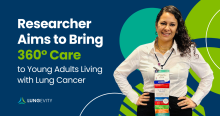
Researcher Aims to Bring 360-Degree Care to Young Adults Living with Lung Cancer

Young adults (less than 50 years of age) are being diagnosed with lung cancer at increasing rates. They tend to be women of Hispanic or Asian descent and are typically diagnosed with advanced-stage lung cancer. Research is ongoing to help us develop effective options to treat these patients medically, but little is known about the effects of the diagnosis on their mental, social, and financial health or their family planning. To help us better understand the needs of this growing population, LUNGevity awarded one of its 2022 Health Equity and Inclusiveness Junior Investigator Awards to Narjust

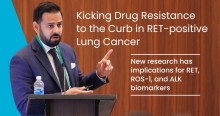
Kicking Drug Resistance to the Curb in RET-positive Lung Cancer

Read time: 4 minutes Lung cancers that test positive for the RET biomarker are often treated with targeted therapy. While this type of treatment has improved the duration and quality of life for many people living with lung cancer, we know that eventually these tumor cells develop drug resistance and begin to grow again. Researchers have been trying to understand what causes this drug resistance so we can develop treatment approaches to extend the time patients can effectively be treated with targeted therapies. Two signaling pathways, involving EGFR and MET proteins, are thought to be key

Leveraging Basic Science to Stop Drug Resistance in RET+ Lung Cancer

Advances in targeted therapies have allowed us to treat some types of lung cancer with mutations in specific genes (for example, EGFR, KRAS, and RET). This has given some patients with lung cancer a better quality of life and longer survival. However, even after an initial response to the targeted therapy, lung tumors will eventually grow again. Research suggests this drug resistance is likely to involve drug-tolerant persister cells, or DTPCs—cells that tolerate the drug and persist after treatment. DTPCs pose a major challenge for treating many types of cancers, including lung cancer. To

Highlights of AACR 2024: Where the Laboratory Meets the Patient

Read time: 7 minutes It’s spring! The daffodils bloom, the days become longer, and I attend the annual meeting of the American Association for Cancer Research (AACR). For those of you who are new to this meeting, it is the largest gathering of laboratory scientists and clinicians in the world—coming together to discuss how to take science from the bench (laboratory) to patients and communities. This year’s meeting was held in sunny San Diego and brought together more than 23,000 attendees. Below I summarize key meeting highlights that are of interest to the lung cancer community. Lung Cancer

Cancer Grand Challenges Summit 2024: No Time to Waste in Addressing Some of Toughest Challenges in Cancer

Read time: 4 minutes I just returned from the Cancer Grand Challenges Summit, held March 5–8, 2024 in London, England. Cancer Grand Challenges was launched in 2020 as a collaboration between Cancer Research UK and the National Cancer Institute in the US, whereby they provide $25 million to international, multi-institutional teams working to address some of the most perplexing issues in the cancer field. I am LUNGevity’s representative on Team CANCAN, which is working to understand and treat cancer cachexia, the extreme loss of muscle and fat tissue (often called “wasting”) that often occurs in

Leveraging Genetics to Understand Why Younger Adults Are Developing Lung Cancer

Read Time: 5 minutes It’s a mystery that has been baffling researchers: Why do some people develop lung cancer in their 20s or 30s? While we used to think lung cancer was only caused by exposure to tobacco and environmental factors like radon, researchers are starting to learn that the development of lung cancer, particularly in younger adults, could have a hereditary component. LUNGevity partnered with the Lung Cancer Initiative, a leading nonprofit in North Carolina, to support research into this space by awarding one of our 2023 Career Development Awards to Jaclyn LoPiccolo, PhD, MD

LUNGevity Announces $1.2M in Lung Cancer Workforce Development Research Awards

LUNGevity Foundation is proud to announce the recipients of four awards to bolster the lung cancer research workforce— the Career Development Award, the VA Research Scholar Award, the Health Equity and Inclusiveness Research Fellow Award, and the ASTRO-LUNGevity Residents/Fellows in Radiation Oncology Seed Grant. “Progress in lung cancer research is only possible with a vibrant and diverse thoracic oncology workforce,” notes Upal Basu Roy, PhD, MPH, executive director, LUNGevity Research. “We have to maintain a pipeline of excellent researchers from a diverse range of backgrounds to create

Treatment & Research Takeaways: ESMO 2023 Meeting

The European Society for Medical Oncology (ESMO) recently held its annual conference from October 20 – 24, 2023 in Madrid, Spain. ESMO represents one of the largest gatherings of the international oncology community, and this year’s meeting had over 30,000 registered attendees from around the world. Though October 19th brought record rainfall to Madrid, breaking a 100-year record, the rain in Spain didn’t dampen the palpable excitement of this year’s meeting. This was an especially exciting ESMO because there were a number of important lung cancer presentations that represent practice-changing